Technical references on
H&F Commodities
§ 01
What is H&F Commodities?
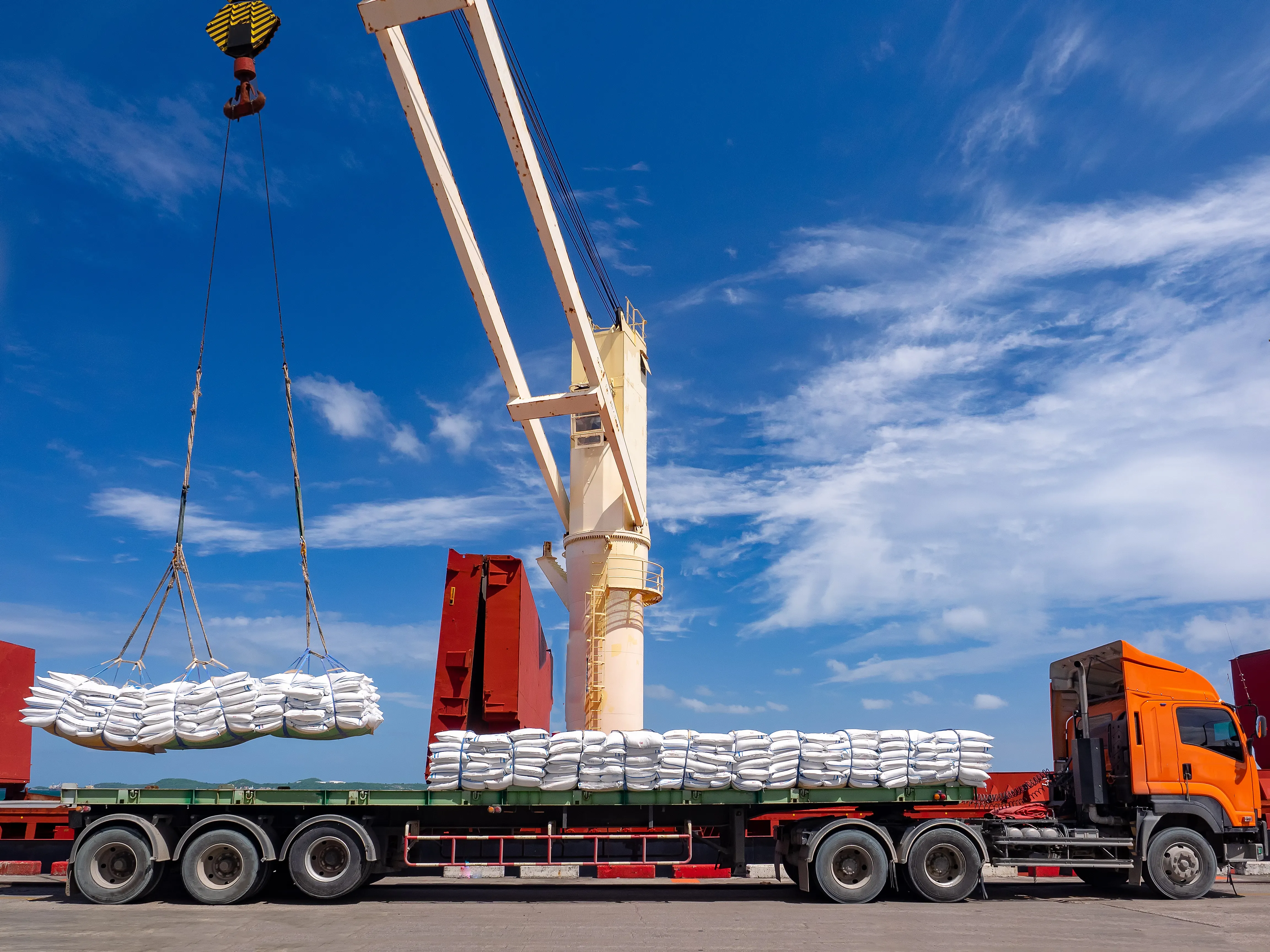
H&F Commodities is a global commodities trading house. We originate Brazilian sugar and deliver it to buyers in the United States, Africa, the Middle East and Asia. The company was formed by two houses, Harmonia and Fidens, and is building its position around recurring contracts, professional governance and robust capital structures. In selected markets we also act as brokers, connecting buyers to supply that meets their specification.
§ 02
What does H&F Commodities do?
Two things. In most operations we take title to the cargo: we originate the sugar, contract it, and answer for it until delivery under the agreed term. In selected markets we act as brokers, using our network to make sure a buyer's demand is met when direct origination is not the right route. Both paths run under the same standard operation, from first contact to delivery, and under the same documentary protocols.
§ 03
Why does H&F exist?
Brazilian sugar reaches global buyers through a chain that is fragmented and weakly standardized. Intermediaries are many, and responsibility dilutes along the way. H&F was built against that. We take title and answer for the chain, we hold to procedural and documentary protocols, and we report constantly rather than when asked. The three values under our wordmark are not a cultural statement. Each one was designed to stand against a specific gap of the industry.
§ 04
Where does the name H&F come from?
H&F unites two houses. Harmonia comes from the Greek harmonía, absorbed into Latin from harmós: a fitting, a joint. Fidens is Latin for confident, worthy of faith, and shares with fiducia the root fid-, the same root that appears in fiduciary. If Harmonia is the agreement, Fidens is the word that sustains it. The ampersand at the centre of the name is the conjunction: two parts that only answer together.
§ 05
Why Brazilian sugar?
Brazil has been the world's largest sugar exporter for two decades, and about half of all globally exported sugar originates there. The harvest calendar is complementary to the Northern Hemisphere, which allows year-round supply for buyers who cannot depend on a single origin. The refining base is mature and the grades produced meet the specifications required by industries, distributors and refiners in most import markets.
§ 06
Which markets does H&F serve?
We serve the United States, Africa, the Middle East and Asia. Our buyers are industries that consume sugar as an input, distributors that supply regional markets, and brokers acting for institutional buyers. Requirements differ by destination: grade, packaging, delivery term and documentation are defined per contract, and the regulatory conditions of the destination country are assessed before an offer is issued.
§ 07
What sugar grades does H&F work with?
ICUMSA 45 and VHP are the grades we contract most often. We also work with ICUMSA 100 and ICUMSA 150, Demerara and organic sugar. Specification, packaging and origin are defined per contract, and cargo is inspected by an independent surveyor before shipment. Grades outside this list can be discussed case by case.
§ 08
What is ICUMSA?
ICUMSA stands for International Commission for Uniform Methods of Sugar Analysis. In trade, the ICUMSA number refers to a colour measurement: the lower the number, the whiter and more refined the sugar. ICUMSA 45 is a refined white sugar used directly by food and beverage industries. Higher numbers indicate progressively darker sugar, closer to raw. The scale is an industry standard, not a proprietary classification, and it appears in contracts as part of the agreed specification alongside polarization, moisture and other parameters.
§ 09
What is the difference between ICUMSA 45 and VHP?
ICUMSA 45 is refined white sugar, ready for direct industrial use, with low colour and high polarization. VHP stands for Very High Polarization, a raw sugar produced to be refined rather than consumed directly. Refiners buy VHP as feedstock and process it into white sugar at destination. The two serve different buyers and, in several jurisdictions, fall under different tariff and quota treatment, so the choice between them is commercial and regulatory as much as technical.
§ 10
What contracting modalities are available?
Three. Spot covers a single shipment, including cargo already OTG and ready for short-term pickup. Annual covers continuous supply through the harvest, with a trial shipment available before the programme begins. Multi-year covers predefined volume and pricing windows across more than one harvest. The modality determines how pricing and delivery windows are structured, and it is agreed before the SPA is drafted.
§ 11
Which Incoterms does H&F operate under?
We contract most often under FOB, CIF and DDP. FOB and CIF conclude at shipment, with responsibility passing at the port of origin. DDP places the cargo at the agreed destination, with import formalities and duties handled by us. Other Incoterms 2020 terms, including FAS, CFR, CPT, CIP, DAP, DPU, EXW and FCA, are available on request. The term chosen determines where responsibility for the cargo passes, and it changes both the price basis and the documentation set.
§ 12
What is OTG cargo?
OTG means on the ground. It refers to cargo already at a destination warehouse or terminal, cleared and available for short-term pickup, rather than cargo still to be shipped from origin. OTG is not an Incoterm: it describes where the cargo is, not how responsibility is allocated between seller and buyer. Buyers who need immediate delivery often start with OTG while a recurring programme is contracted.
§ 13
How does a typical transaction proceed?
Eight steps, in a fixed sequence, and the same sequence shown on our trading page. The buyer opens with a LOI stating grade, destination, delivery term and schedule. We respond with a SCO carrying the indicative price and the payment protocol. The buyer confirms with an ICPO, which makes the order firm. Both sides then sign the SPA, the binding contract, and only after signature do the banks enter. The payment instrument comes next, a DLC or an SBLC, depending on the structure agreed in the SPA. Shipment follows: cargo is loaded at the port of origin, inspected and certified by an independent surveyor, and the shipping documents are issued. At discharge, the cargo arrives and is cleared at destination. Delivery closes the cycle, with the cargo released as contracted, spot OTG or recurring DDP. This sequence is illustrated for DDP and OTG operations. Under FOB and CIF, the operation concludes at shipment.
§ 14
What are LOI, SCO, ICPO and SPA?
They are the four documents that precede a contract in bulk commodities trade. A LOI, letter of intent, is the buyer's formal statement of what it needs. A SCO, soft corporate offer, is the seller's indicative response, carrying price and payment protocol. An ICPO, irrevocable corporate purchase order, is the buyer's firm order against that offer. The SPA, sale and purchase agreement, is the binding contract signed by both sides. Nothing sensitive is exchanged before the SPA is signed, which is the market's standard defence against document circulation and fraud.
§ 15
What are DLC and SBLC?
Both are bank instruments used to secure payment. A DLC, documentary letter of credit, is issued by the buyer's bank and pays the seller against presentation of the contractual shipping documents. An SBLC, standby letter of credit, works as a guarantee: it is drawn only if the obligation it covers is not met. Which instrument applies depends on the modality, the delivery term and the banks on each side, and it is defined in the SPA before issuance.
§ 16
Why does H&F not publish prices?
Sugar prices move with the international market, freight, the harvest calendar and, in several destinations, tariff and quota conditions. A published number would be wrong within days, and it would say nothing about the specification, the delivery term or the schedule that a particular buyer needs. Pricing is issued in the SCO, after a LOI has defined those parameters. The sequence is a market protocol rather than a formality: it is also how both sides confirm they are dealing with a real counterparty.
§ 17
How does H&F validate counterparties?
Every counterparty goes through KYC and due diligence before commercial documents are exchanged. We verify corporate structure and beneficial ownership, screen against sanctions and adverse media lists, and confirm banking history. Documentation is exchanged through controlled channels and only after the contractual commitment is firm, which is the market's standard defence against document fraud. Where a counterparty declines to formalize in writing, we do not proceed.
§ 18
How is cargo quality assured?
Specification is defined in the SPA and verified before shipment by an independent surveyor, typically SGS or an equivalent internationally recognized inspection company. Quality, quantity, weight and origin are certified at the port of loading, and the certificates form part of the document set presented for payment. Where the destination requires additional certification, phytosanitary or otherwise, it is arranged as part of the same document set.
§ 19
How do I start a conversation with H&F?
Through the form on our contact page. Your message will be answered personally by a Founding Partner. It helps to include the grade you need, the destination, the delivery term you work under and the schedule you have in mind. We are flexible and committed to finding the right solution for each client's demand and business. There is no automated funnel behind this form and no mailing list.